
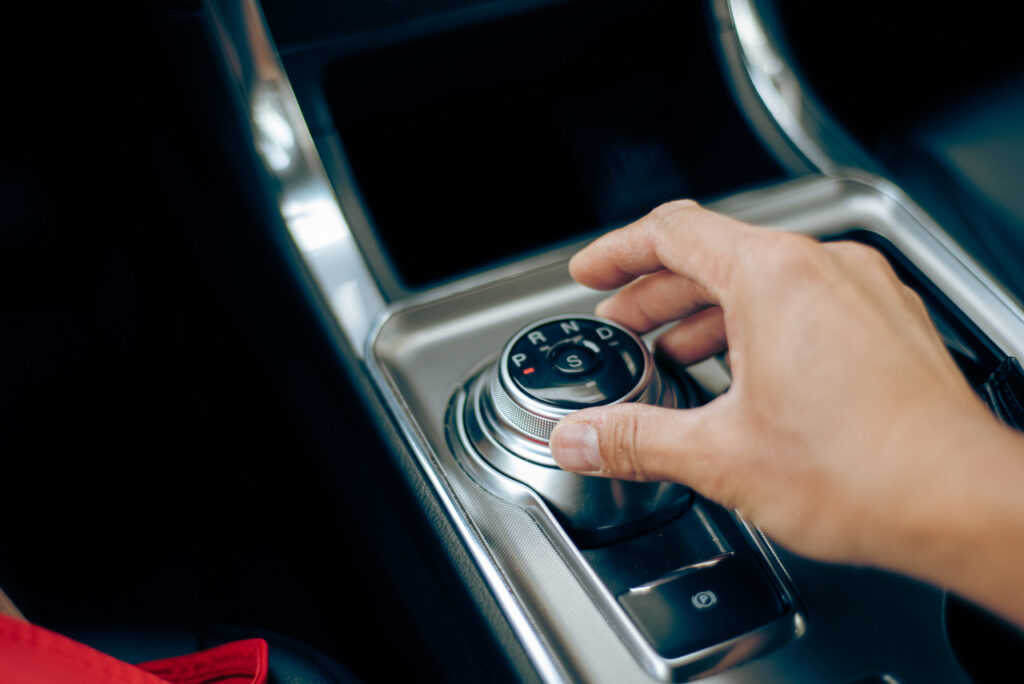
A vehicle rollaway case is a civil claim that arises when a parked vehicle moves on its own, with no driver at the wheel, and causes injury, death, or property damage. The defining feature of a rollaway accident is that the vehicle was supposed to be stationary. The driver placed it in Park, stepped out, and the vehicle nevertheless shifted into gear, slipped out of Park, or otherwise failed to hold position.
The consequences can be severe. In one widely reported 2018 incident, a New Mexico auto shop mechanic named Jose Chicas was killed when a 2015 BMW X5 he had just moved rolled over him as he walked away — an event captured on surveillance video and now the subject of litigation alleging the vehicle’s toggle-style shifter was confusing and lacked an automatic safeguard. According to the National Highway Traffic Safety Administration (NHTSA), rollaways kill an average of 144 nonoccupants per year and injure roughly 1,886 more annually, accounting for about 17 percent of all fatalities in non-traffic crashes.
How Do Rollaway Accidents Happen?
Most vehicle rollaway accidents trace to a failure in the vehicle’s parking or transmission system. Common culprits include a worn parking pawl that fails to engage, a faulty Brake Transmission Shift Interlock (BTSI) solenoid, a deteriorated shift cable bushing, or a transmission that allows the shifter to rest between Park and an adjacent gear. A second category involves shifter designs that give drivers poor feedback about whether the vehicle is actually in Park — rotary dials, monostable e-shifters, and push-button controls. Keyless ignitions compound the problem, because modern engines are quiet enough that a driver may exit believing the vehicle is off when it is still running.
Are Rollaways a Human Factors Problem or a Design Problem?
From a human factors perspective, many rollaways are not simply the product of careless drivers. For decades, drivers learned to shift gears using a lever with distinct physical positions and clear tactile feedback — the driver could feel the transmission settle into Park. Newer electronic shifters, including rotary dials, monostable levers that return to a center position, and push-button controls, break that long-standing mental model. They often provide limited haptic or visual confirmation of gear state, and they ask the driver to interpret a small indicator light rather than rely on hand position.
The result is a predictable class of errors: a driver intends to put the vehicle in Park, believes she has done so, and exits — only to have the vehicle roll. Courts and safety researchers increasingly recognize that when a design foreseeably induces the same mistake across large numbers of otherwise attentive drivers, the error is a symptom of the design, not a defense for the manufacturer. This framing distinguishes genuine driver negligence from design-induced error, and it supports the argument that feasible safeguards — automatic shift-to-park, electronic parking brake engagement on driver exit, clearer shifter feedback — should be standard rather than optional.
What Legal Theories Apply in a Rollaway Lawsuit?
Rollaway cases typically proceed under two overlapping theories: product liability against the manufacturer and negligence against the driver, a repair shop, or, in some cases, the manufacturer itself.
Product liability claims generally take one of three forms:
- A design defect claim asserts that the product’s underlying design renders it unreasonably dangerous in ordinary use. The plaintiff must show the design was defective and that a safer, feasible alternative was available — for example, an automatic shift-to-park feature or an electronic parking brake that engages when the driver exits an unsecured vehicle.
- A manufacturing defect claim targets a specific unit that departed from the intended design because of an error on the production line, such as a faulty weld, a miswired solenoid, or a defective shift cable bushing. The plaintiff must tie that particular flaw to the injury.
- A failure-to-warn claim applies where the product itself may not be defective but carries inherent risks that the manufacturer did not adequately communicate. The plaintiff must show that clearer warnings or instructions would have prevented foreseeable harm during ordinary use.
Negligence claims, by contrast, focus on conduct rather than the product. They may reach a driver who failed to secure the vehicle, a repair shop that performed faulty transmission or brake work, or a manufacturer whose post-sale conduct — such as a delayed recall — breached a duty of care.
Why Are Rollaway Cases Complex?
Rollaway litigation generally requires engineering and human factors experts, accident reconstruction, and a careful review of recall history and internal manufacturer documents. Major automakers, including Ford, Fiat Chrysler (now Stellantis), and Jaguar Land Rover, have faced recalls and lawsuits tied to rollaway defects, and NHTSA has investigated the issue repeatedly. Congress has also taken notice: the Infrastructure Investment and Jobs Act of 2021 directed NHTSA to evaluate technology for preventing keyless-ignition rollaways and report back with recommendations, and additional legislation has been introduced to mandate automatic shift-to-park and engine shutoff features.
Why Is Preserving the Vehicle So Important?
Anyone injured in a suspected rollaway — or any family member pursuing a claim on behalf of someone who was killed — should take immediate steps to preserve the vehicle in its post-incident condition. In a product liability case, the vehicle itself is the central piece of evidence. An independent inspection by qualified engineering and human factors experts is often the only way to document the condition of the transmission, the shifter assembly, the parking pawl, the BTSI system, and any software or electronic components implicated in the event. That inspection cannot meaningfully occur if the vehicle has been repaired, scrapped, auctioned, or returned to service.
Insurance companies routinely move quickly to total a vehicle and dispose of it, and once that happens the opportunity to prove a defect is usually gone for good. A claimant protecting her rights should notify her insurer in writing that the vehicle must be preserved pending inspection, arrange for secure storage, and consult a product liability attorney before authorizing any repair, salvage, or release of the vehicle.
What Damages Are Available in a Rollaway Case?
Recoverable damages in a rollaway lawsuit follow the standard personal injury framework: economic losses such as medical expenses, lost earnings, and property damage; non-economic losses such as pain and suffering and loss of enjoyment of life; and, where a manufacturer knew of a defect and failed to act, punitive damages.
About The Cooper Firm
The Cooper Firm is a product liability and civil litigation firm that handles complex cases involving defective vehicles, including rollaway incidents tied to shifter design, BTSI failures, and related transmission defects. If you have questions about preserving evidence, bringing a claim, or potential recalls, contact The Cooper Firm.
Frequently Asked Questions
Who is responsible in a vehicle rollaway case?
Potential defendants include the vehicle manufacturer, for a design or manufacturing defect in the shifter, transmission, or Brake Transmission Shift Interlock (BTSI) system; a repair shop that performed faulty work on the transmission or brake components; and, in some circumstances, the driver of the vehicle. More than one defendant is often involved in a single case.
If I forgot to put my vehicle in Park, is my claim gone?
No. This is one of the most common concerns people raise after a rollaway, and it is not a reason to assume a claim is barred. Modern electronic shifters, rotary dials, and push-button controls often give drivers poor feedback about whether the vehicle is actually in Park, and a driver who believes she has shifted into Park and exited the vehicle may in fact have left it between gears. Human factors research and a growing body of case law recognize that when a design foreseeably induces the same mistake across large numbers of otherwise attentive drivers, the error is a symptom of the design rather than a defense for the manufacturer. Whether the vehicle should have automatically shifted to Park, engaged the electronic parking brake on driver exit, or provided clearer feedback about gear state are questions for a product liability analysis — and they often remain viable even where driver inattention played some role.
What should I do right after a rollaway accident?
Get medical attention first and make sure a police report is filed. Document the scene with photos and video if possible, and collect contact information for any witnesses. Critically, do not allow the vehicle to be repaired, scrapped, or released by the insurer — the vehicle itself is the most important piece of evidence in a product liability case. Notify your insurer in writing that the vehicle must be preserved, and consult a product liability attorney before authorizing any disposition of the vehicle.
How long do I have to file a rollaway lawsuit?
Deadlines for filing vary by state. In Georgia, the statute of limitations for personal injury is two years from the date of the incident, and a separate statute of repose bars most product liability claims brought more than ten years after the vehicle’s first sale to a consumer. California also applies a two-year statute of limitations for personal injury. Because these deadlines vary, can be shorter than people expect, and may interact with other limits like statutes of repose, it is important to consult a product liability attorney as soon as possible.
Does a recall affect my rollaway case?
A recall can be very strong evidence in a rollaway case. Beyond the recall notice itself, the underlying record often includes communications between the manufacturer and the National Highway Traffic Safety Administration in the months or years leading up to the recall — engineering analyses, internal warranty data, field reports, and correspondence that can show what the manufacturer knew about the defect and when it knew it. That record is often central to proving a design defect claim, and in some cases, a punitive damages claim. A recall is not, however, a substitute for a lawsuit; it does not automatically compensate injured victims, and whether a specific vehicle is affected still requires an independent inspection.
What damages can be recovered in a rollaway lawsuit?
Damages generally fall into three categories: economic losses such as medical bills, lost wages, and property damage; non-economic losses such as pain and suffering and loss of enjoyment of life; and, in cases involving particularly egregious conduct such as a manufacturer concealing a known defect, punitive damages.